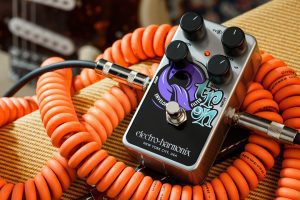
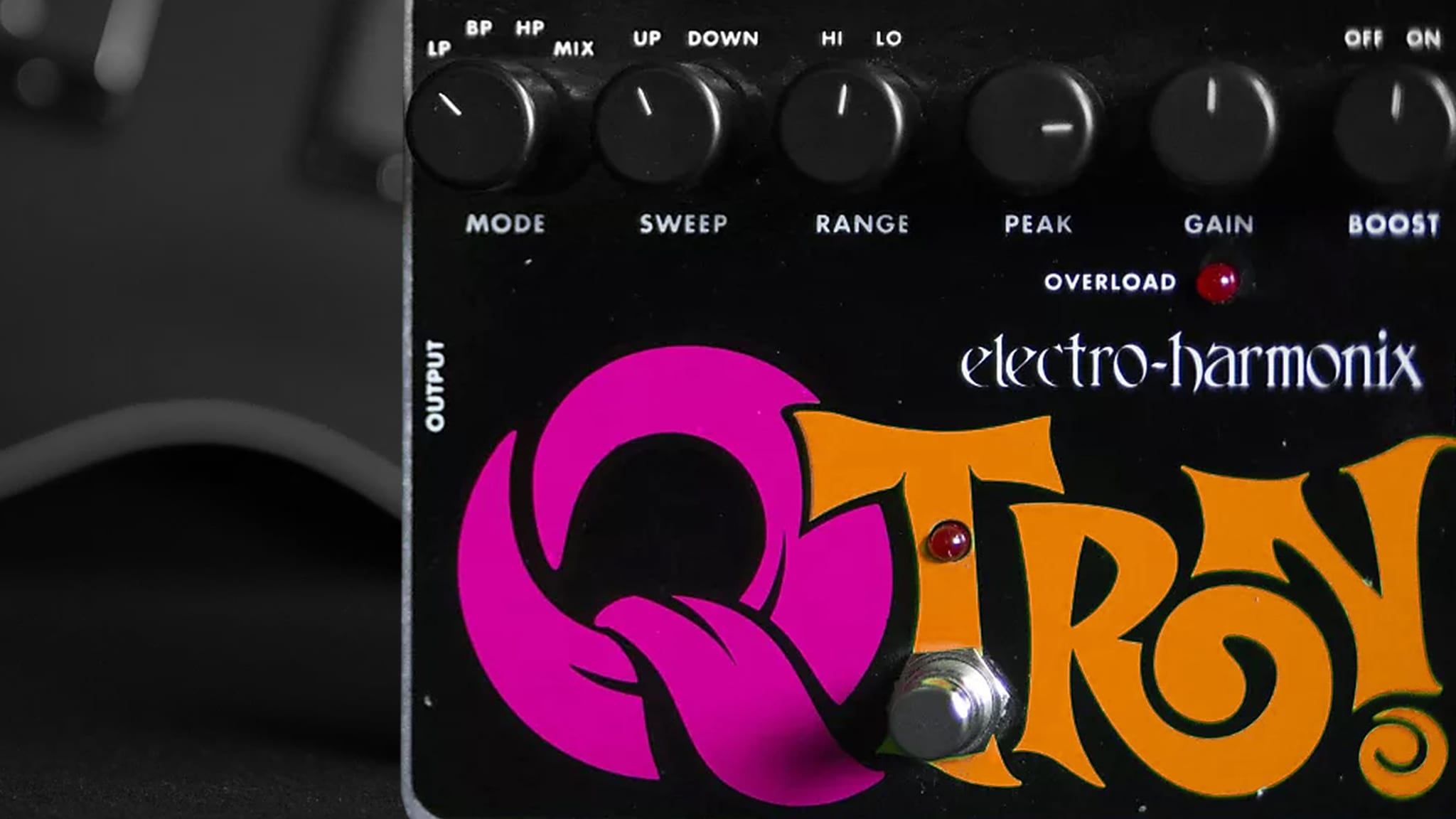
Q-Tron Plus
Envelope Filter with Effects Loop
The classic Q-Tron gets even funkier!
$192.30
Sound Clips
Classis Filter Sweep Funky
High Pass Filter Sweep Up
Distortion and Delay in Effects Loop
Q-Tron Plus
Q-Tron Plus
DESCRIPTION
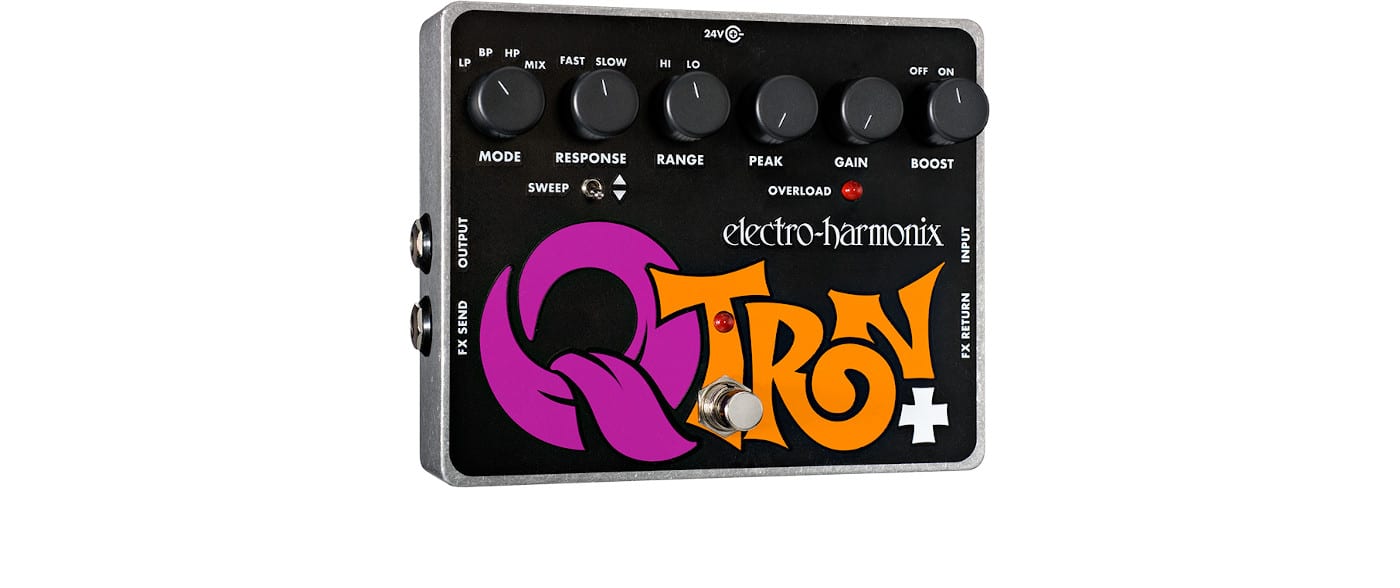
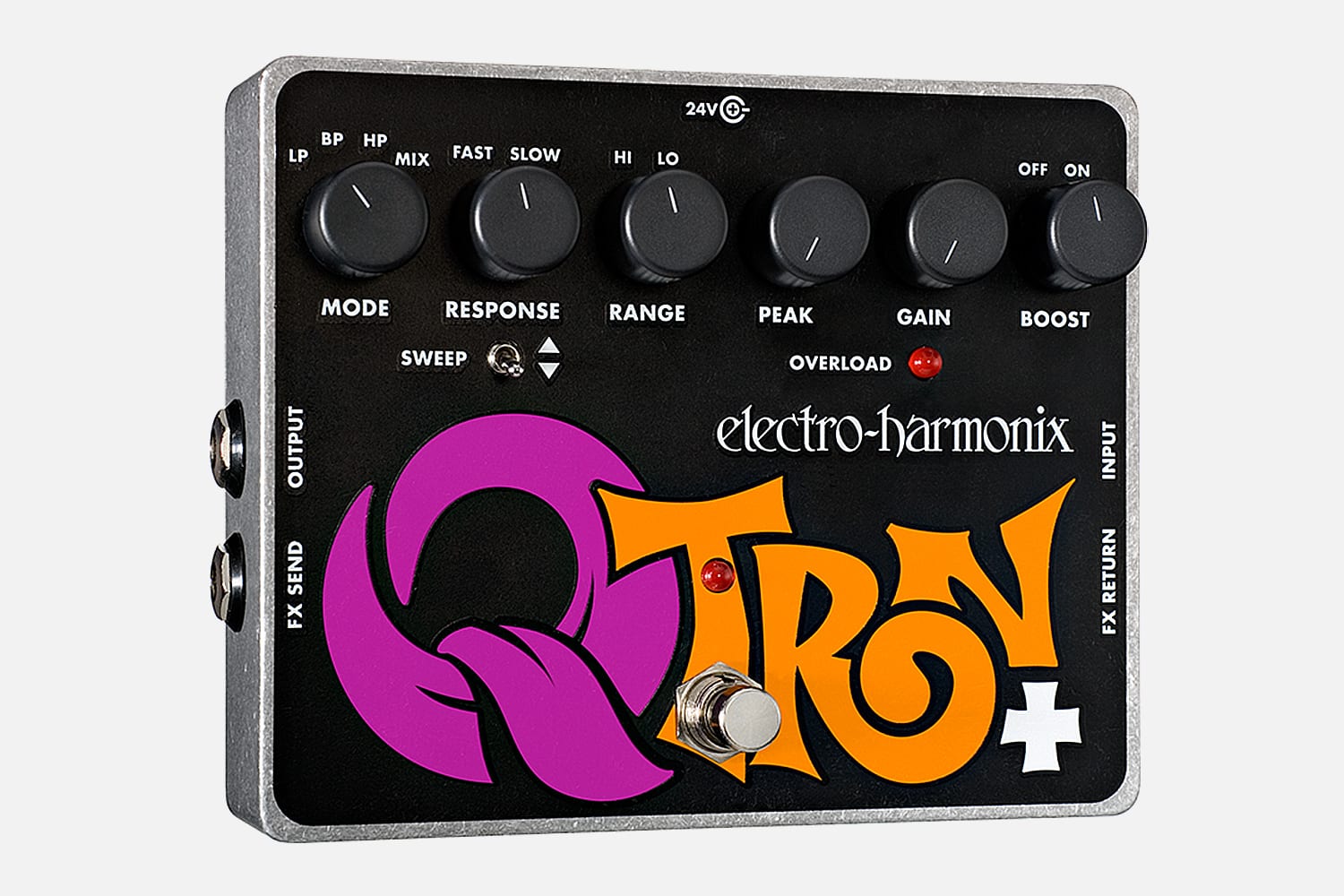
Same design as the original EHX Q-Tron but with extremely useful Effects Loop and an Attack Response Switch. The Effects Loop gives the musician the ability to place an additional effect, or chain of effects between the EHX Q-Tron Plus’s preamp and filter section without changing the envelope drive. This is particularly important with most distortion devices, as most all do not have much of an amplitude envelope. The FX loop will also fire up your creative juices to try all sorts of combinations in the effects loop: try the Micro POG into a Deluxe Memory Man. You can invent all sorts of novel effects. The added Response Switch selects between a slow, smooth, vowel-like attack and the fast, snaked response of the original Q-Tron.
- True bypass
- Dedicated effects loop allows you to place any effect or pedal board into the loop
- FX send and return without changing the envelope drive
- Selectable low pass, band pass and high pass filters
- Resonant peak control to adjust the filter’s Q from subtle to dramatic
- Response switch changes the reaction time of envelope follower from fast to slow
- Switchable hi or lo frequency sweep ranges
- Adjustable gain knob and boost switch
- Sweep direction switch for up or down filter sweeps
- Power adapter included
SPECIFICATIONS
Circuit
Analog
Bypass
True Bypass
Audio
Mono
Effects Loop
Yes
Power Supply
24VDC-100mA power adapter included
Dimensions (in)
5.75 x 4.75 x 2.5
Current Draw
35mA
Year Released
2008
UPC
683274010670
Owner's Manual